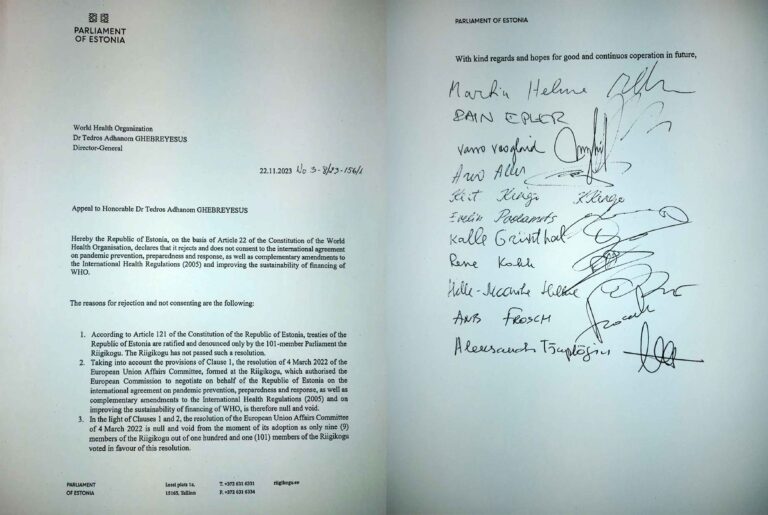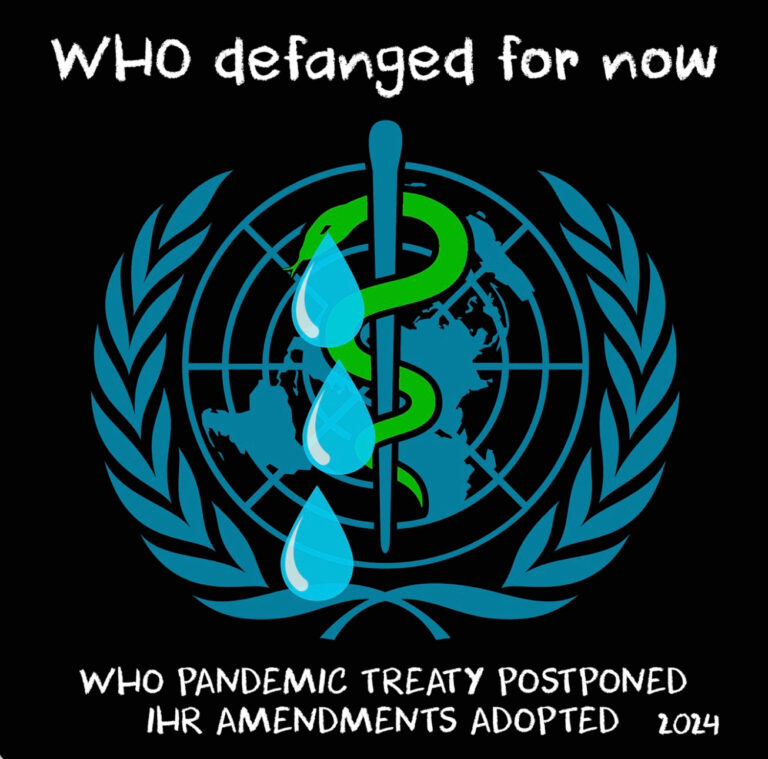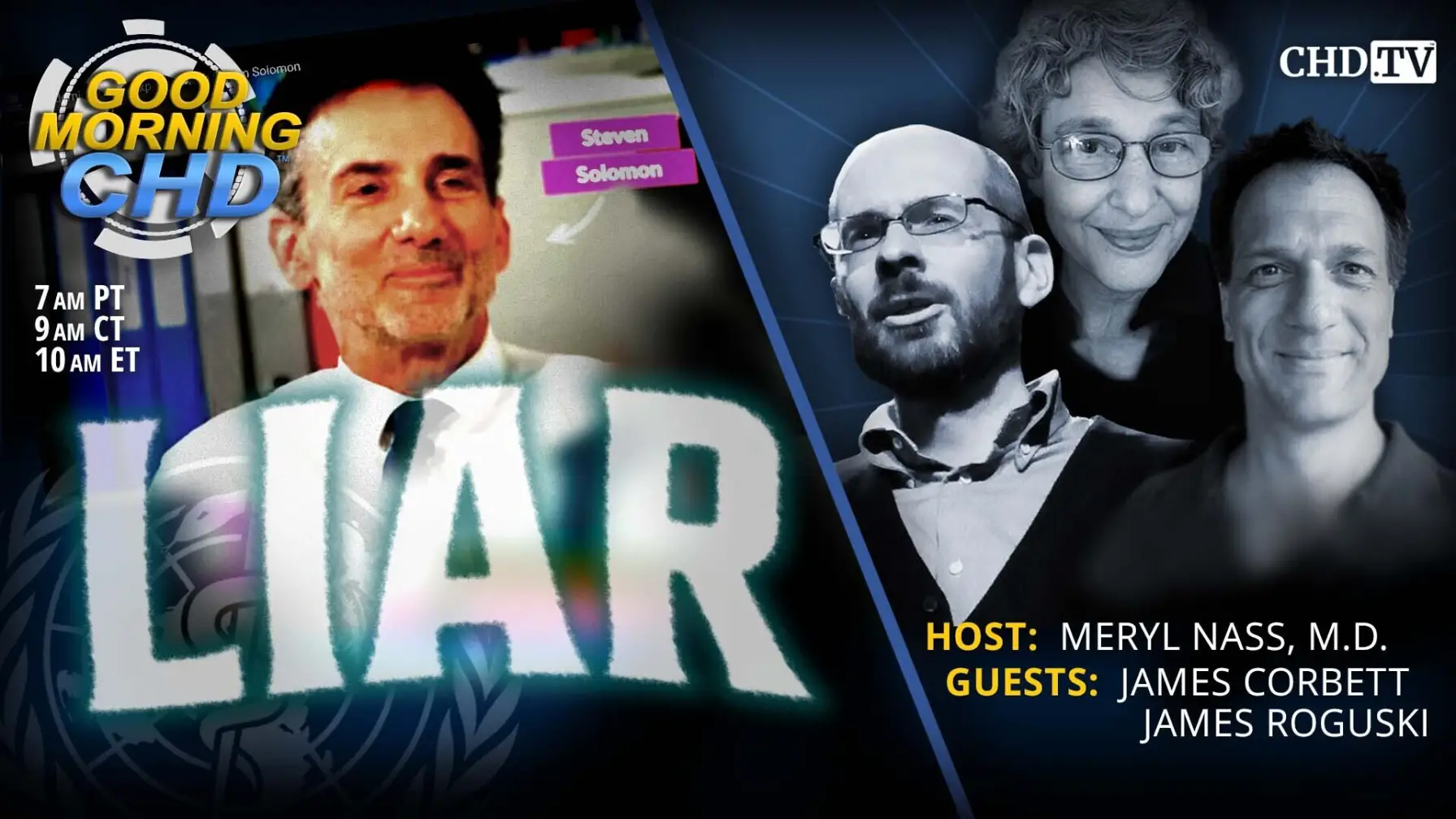

Meet Steve Solomon — Principal Legal Officer at the WHO. After it was revealed at the fifth meeting of the WGIHR that the group would be unable to meet their deadline, Solomon stepped in to reinterpret article 55 in what appears to be an attempt to PREVENT the public from seeing the amendments before they are passed. Are these ‘negotiations’ on the IHR amendments and pandemic accord really just smokescreen and theater, designed to placate the public into thinking there is some sort of democratic process in place — as the digital biosecurity state is already being built up around us? Dr. Meryl Nass, James Corbett, and James Roguski peel back the lies and warn us why it’s time to start paying attention. Tune in!
Good Morning CHD is a daily news show by Children's Health Defense TV bringing you the latest daily news ☀️
Similar Posts
We’re in the Middle of a Global Coup — Here’s How We Stop It
In this interview board-certified internist and biological warfare epidemiologist Dr. Meryl Nass discusses the dangers posed by the World Health Organization’s upcoming pandemic treaty and the International Health Regulation (IHR) amendments. She also wrote about this in a recent article titled “The WHO’s Proposed Treaty Will Increase Manmade Pandemics.”…
Who Trusts the WHO? Reforming massive agencies may be a task too great.
The WHO (World Health Organization) took center stage during the COVID pandemic as the global coordinator of effective response. Questions about the organization’s proper role – and competence – preceded and now survive the COVID-19 crisis. Was the WHO effective and apolitical in its response, and can it be trusted with its global medical preeminence?
How Farmers Become Serfs
The state of farming in modern-day America is far removed from the way it was just decades ago. In this “Good Morning CHD” episode, Breeauna Sagdal and Meryl Nass, M.D. have a timely conversation on various factors that determine the success of agriculture, today. They discuss loans and pricing, inspection and approval processes, industry monopolization, volatility in the supply chain, food shortages and more. Tune in!