
|

Pesticide Companies seek Liability Protection

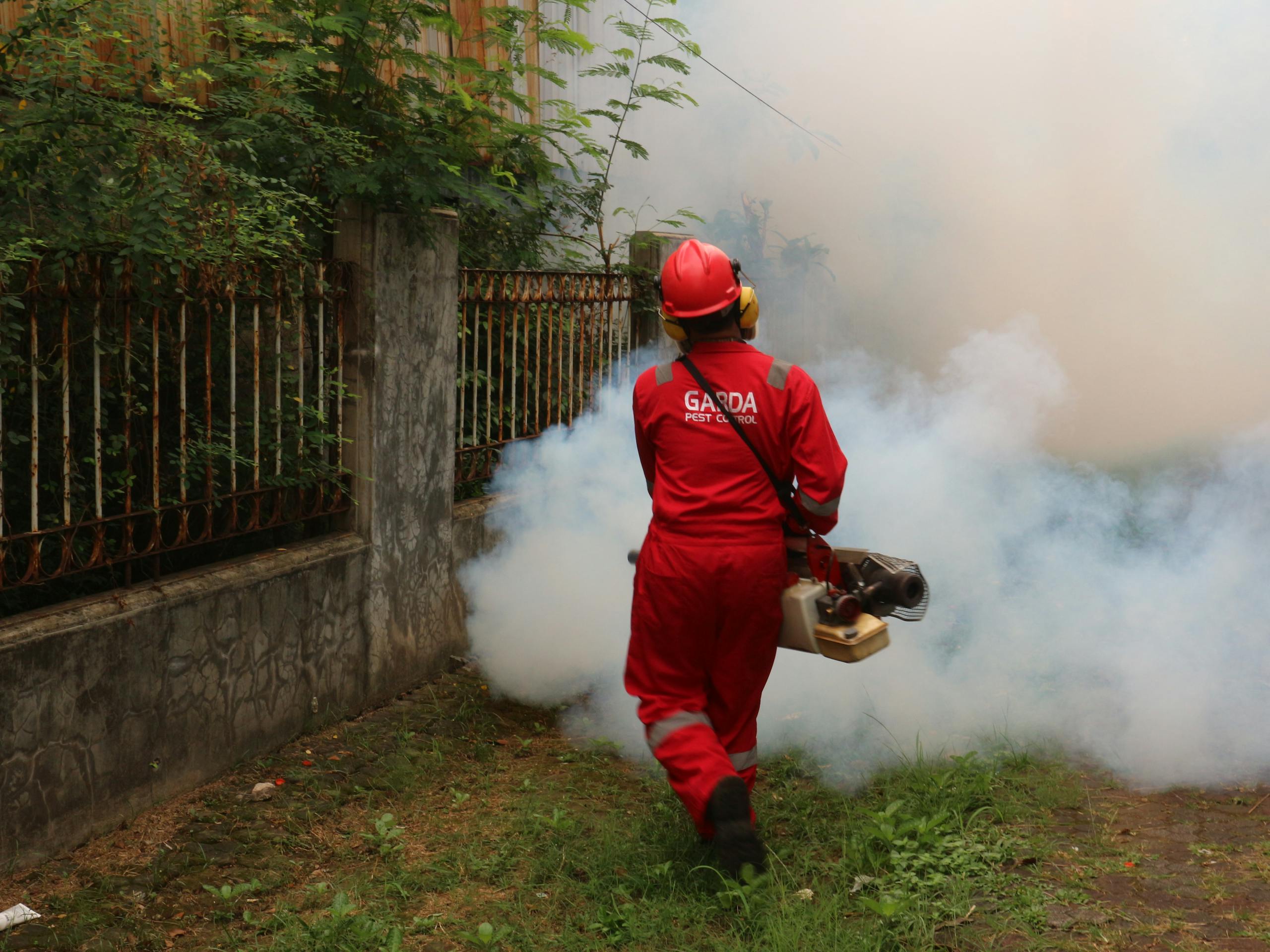
A pest control worker fogging in an outdoor space with smoke to eliminate pests.
Share this article

Please read Dr. Nass’s detailed post here.

On July 22, 2025 the House Interior Appropriations Committee marked up and offered amendments on the current interior appropriations bill, which includes the infamous “Section 453,” a rider that effectively gives pesticide and chemical producers a liability shield.

This shield is constructed by preventing states and the federal government from requiring updated warning labels. It rests on the legal doctrine called “failure to warn.”

The complete bill draft at the house website.

This is the complete text of Section 453 from the link above:
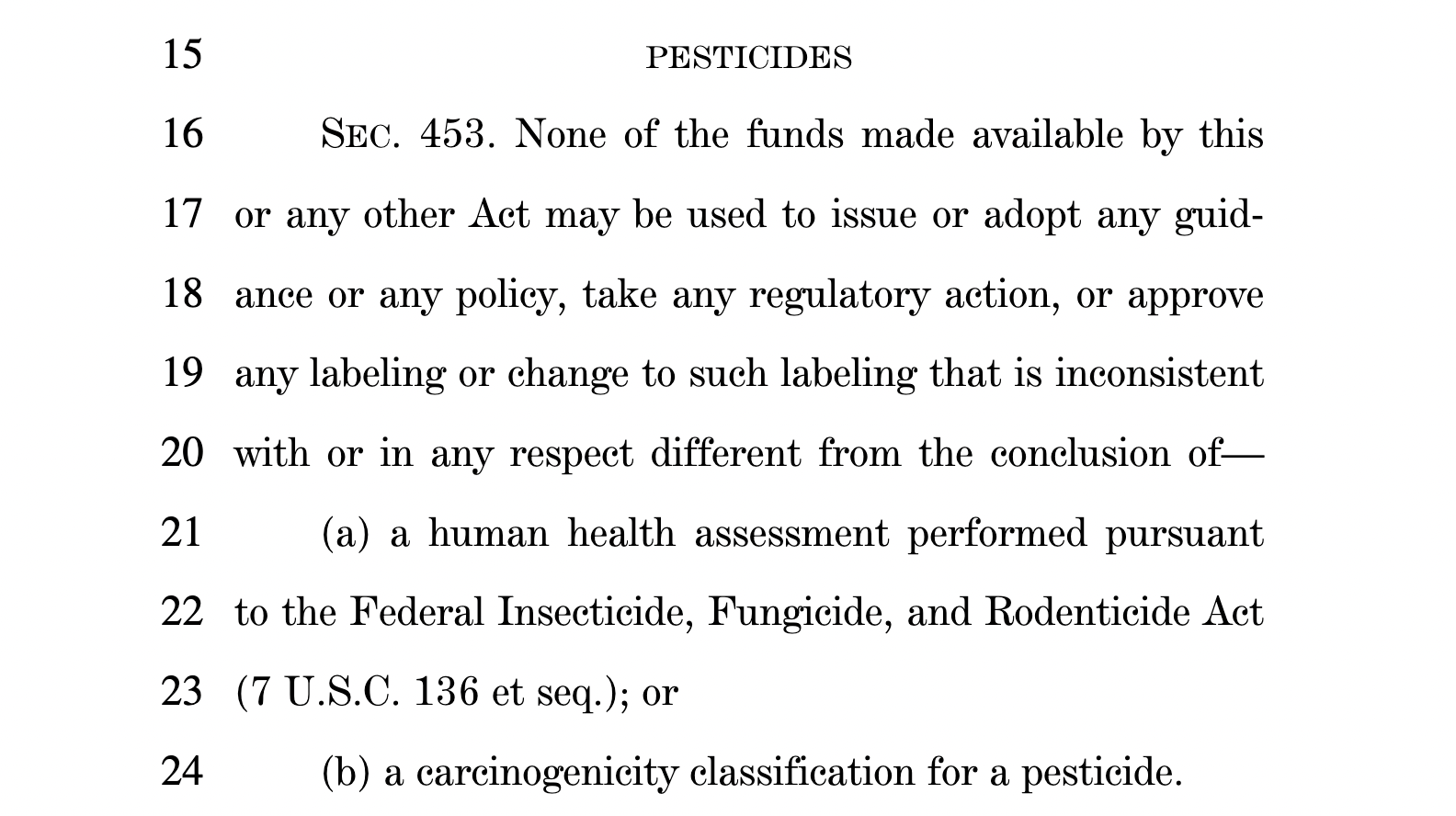
Near the end of the day, Representative Pingree from Maine proposed an amendment that would strike Sec. 453, effectively leaving the laws on this topic as they have stood for years. The discussion was 20 minutes long. It can be viewed on the live stream at Youtube starting at minute 3:23:04.


Similar Posts

  • Bayer has paid over $10 Billion for glyphosate litigation

    Share this article

    Now it wants a liability shield to end the lawsuits, and it is determined to get it, by hook or by crook.  Can we stop it? In 2018, Bayer acquired Monsanto, despite Monsanto starting to lose legal cases in which Roundup was alleged to have caused cancer. It must have looked like a clever deal to Bayer, with the litigation reducing Monsanto’s price. But Bayer did not foresee that the Roundup litigation could get out of hand.

  • Pharma Food: Biotech’s Push To Control Your Plate

    Share this article

    Share this article Elze van Hamelen Elze van Hamelen uncovers the hidden dangers of pharma food, where biotech,…

  • Food and insects

    Share this article

    Share this article “Future Food” – No Thanks! Lisa Renberg We are living in a world with heavily…

  • SUPPORT:  Banning EPA Encroachment – HR 7079 

    Share this article

    EPA has issued a proposed rule on effluent limitations for meat and poultry processors that looks like it could be interpreted to apply EPA sewer requirements to all meat and poultry processing plants, even small custom processors.