What Happens If We Do Nothing?

Share this article

Polly Tommey and Valerie Borek have a conversation today, on ‘Good Morning CHD,’ about impending hazards to our personal freedoms. They cover the World Health Organization and its global pandemic policies, prospects of a one world government, vaccines in the food supply and more.

Similar Posts

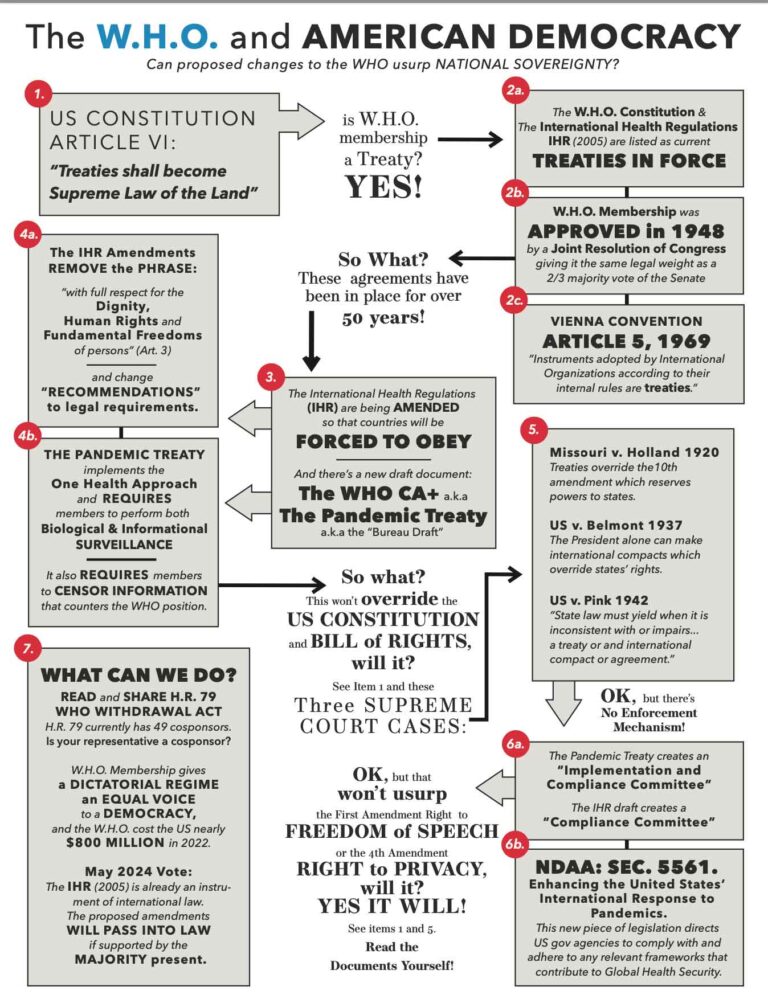
  • What are the International Health Regulations?

    Share this article

    While the current IHRs have been considered recommendations and not orders, the members of the World Health Assembly (the W.H.O. member states) decided to amend the existing IHR in March 2022.[4] Currently only drafts, and not the final IHR proposal are currently available, the drafts…

  • Why Can States Assert that the WHO Has No Authority Over Them?

    Share this article

    The Tenth Amendment of the US Constitution’s Bill of Rights states, “The powers not delegated to the United States by the Constitution, nor prohibited by it to the States, are reserved to the States respectively, or to the people.” This means that the regulation of healthcare falls to the states.

  • Glyphosate Exposed: The Hidden Dangers and How To Reverse Its Harmful Effects

    Share this article

    Share this article Don M. Huber, Ph.D. In his presentation “Glyphosate: A Betrayed Trust and Its Remediation,” Dr….

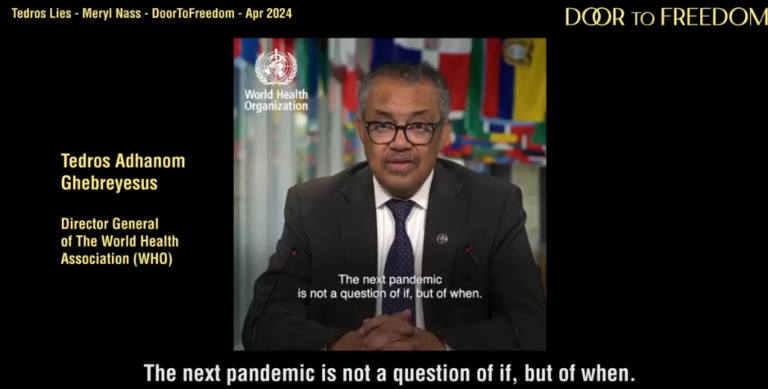
  • Launch of a New Doorway to Freedom

    Share this article

    Nass was one of the doctors who, during the COVID pandemic, offered patients early treatment in Maine and Maryland. As a result, her medical license was suspended and the medical board forced her to undergo psychiatric evaluation. Apparently, in the present era, doctors who think saving lives is more important than following unscientific medical advice…

  • 22 State Attorneys General Oppose the WHO Treaties

    Share this article

    Key reasons provided by the 22 AGs:

    First Reason:

    “Under proposed IHR amendments and the Pandemic Treaty, however, the WHO’s Director-General would achieve the power to unilaterally declare a “public health emergency of international concern” (PHEIC) in one or more member nations. Such declarations can include perceived or potential emergencies other than pandemics, including climate change, immigration, gun violence, or even “emergencies” involving plants, animals, or ecosystems.”