|

Financial Transaction Freedom 2024 More Info

The fight for financial transaction freedom in Tennessee

Financial transaction freedom is the ability to use multiple options to make contracts and effect transactions on a timely basis at reasonable cost without interference. This freedom must be protected at all costs.

Central banks are using digital systems to limit or end such freedom – something they cannot do if citizens, local banks and credit unions, and municipalities and states act together.

Our goal in 2024 is to support leaders working to protect financial transaction freedom and to help our subscribers and audience to support them and their legislative and regulatory efforts. 

Below, you’ll find resources to take to your state and local officials that help protect your financial freedom.

To sign up for Email Updates and to find your legislator go to the following website

Similar Posts

  • Social Credit Score: Fiction or Reality?

    The concept of a social credit system is based on a government-run credit rating system that assigns score and trustworthiness to its citizens and businesses, which could be blacklisted or whitelisted based on the score itself. China’s social credit system started as a regional trial in 2009 and was expanded into a national pilot with eight credit scoring firms in 2014…

  • 15 Minute Cities

    Good evening. Restructuring of Canadian mayors and municipalities under the auspices of the United Nations began in 1992. PM Mulrooney signed Canada onto UN Agenda 21. Canada thus became a UN member nation-state. 178 countries signed on, lured by the promise of big money to go green. By 2000, countries, including Canada, were being governed by directions of the UN G7 G20 World Economic Forum and…

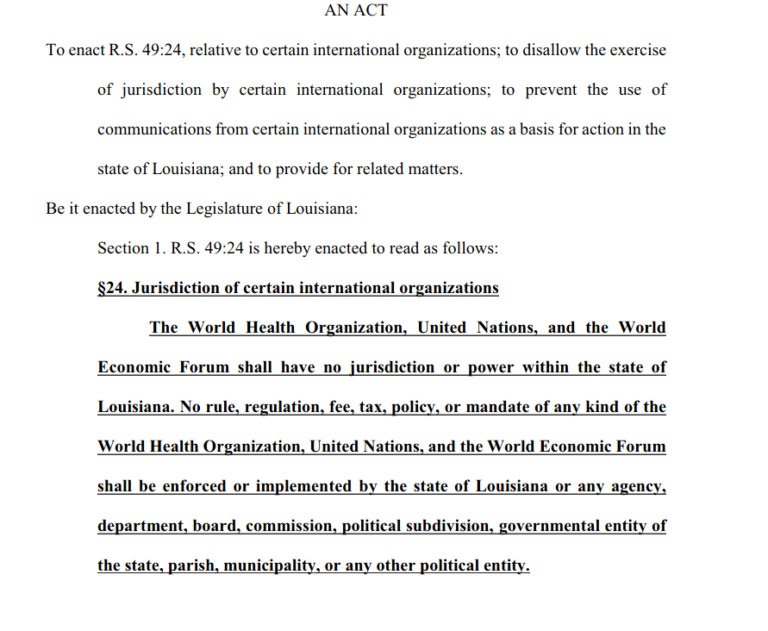
  • Why Can States Assert that the WHO Has No Authority Over Them?

    The Tenth Amendment of the US Constitution’s Bill of Rights states, “The powers not delegated to the United States by the Constitution, nor prohibited by it to the States, are reserved to the States respectively, or to the people.” This means that the regulation of healthcare falls to the states.