
Why a Sovereign State Bank Is Good for Tennessee

Share this article

This article is a repost. It was published by The Solari Report.

I. Executive Summary

This document presents to state legislators in Tennessee the case for setting up a State Bank of Tennessee (SBT). SBT would act as a second-tier bank, interposed between the Federal Reserve Bank of Atlanta (FRBA) and the Tennessee State Government (TSG) on the one hand, and local banks (community banks, credit unions, savings banks, locally-headquartered commercial banks) operating in Tennessee on the other. The goal of SBT is to ensure that the State of Tennessee can better act in the interests of its citizens, better fulfill its constitutional duties, and provide for a resilient and strong economy and financial system. SBT will not compete with smaller local banks for loan and deposit market shares, but will act to support them in a number of ways, including loan participations and purchases, while mutually benefiting from expanded liquidity in state-level short-term money markets.

Small and medium-sized enterprises account for the vast majority of jobs in Tennessee (as elsewhere) and research has demonstrated that their prosperity and capacity for job creation, innovation, and expansion depends to a significant extent on the availability and capacity of small local banks. Small firms and small banks depend on each other in a symbiotic relationship.

The establishment of SBT would help support small and medium-sized enterprises in Tennessee to gain access to funding and deposit markets, significantly strengthening the economy of Tennessee and also increasing tax revenues without any tax increases.

Related Reading:

PDF Copy

Special Solari Report: A Sovereign State Bank and Bullion Depository for Tennessee with Senator Frank Niceley

From The Moneychanger: Senator Frank Niceley – Restoring Freedom in Tennessee

Special Solari Report: Free in Tennessee: Kicking Tyranny to the Curb

Similar Posts

  • 22 State Attorneys General Oppose the WHO Treaties

    Share this article

    Key reasons provided by the 22 AGs:

    First Reason:

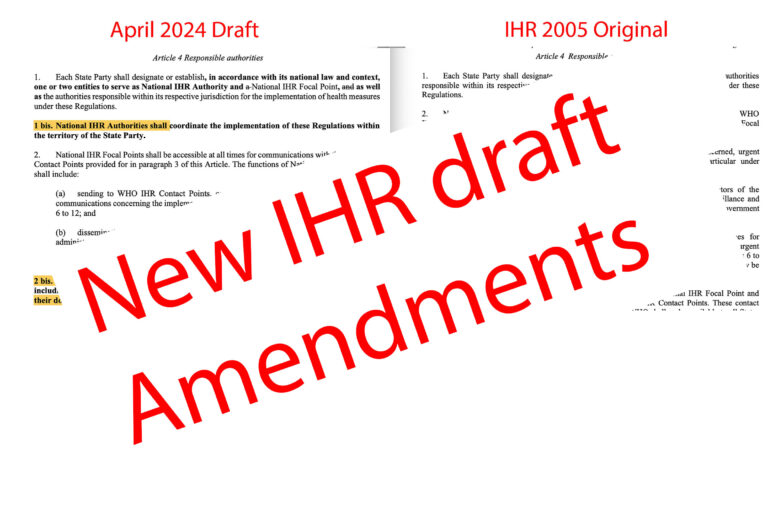
    “Under proposed IHR amendments and the Pandemic Treaty, however, the WHO’s Director-General would achieve the power to unilaterally declare a “public health emergency of international concern” (PHEIC) in one or more member nations. Such declarations can include perceived or potential emergencies other than pandemics, including climate change, immigration, gun violence, or even “emergencies” involving plants, animals, or ecosystems.”

  • OPPOSE:  Pesticide Immunity – Sec. 10204 [Farm Bill] 

    Share this article

    This section “prohibits the right to sue for failure to warn when harmed by pesticides. In Section 10204 of the House Farm Bill, language shields (gives immunity) to the producers and users of toxic pesticides from liability lawsuits associated with the harm that their products cause…”

  • Central Banks Want CBDCs | Prof Richard Werner | BIG PICTURE

    Share this article

    As part of the upcoming film CBDC: The End of Money, I interviewed renowned economist and professor Richard Werner.

    Professor Werner is the father of the monetary policy concept of quantitative easing, the author of the best-selling book Princes of the Yen: Japan’s Central Bankers and the Transformation of the Economy, and the writer of an important paper on the actual operations of banks.

  • The Coming Cow Wars: Why Raising Cows is a Revolutionary Act

    Share this article

    My wife Jackie and I keep a handful of cows and sheep. We don’t do it for the money, but for the food security and as a way to combat the enemies of cows. Small-scale farming is the antidote to industrial agriculture and confinement animal feeding operations.