
Influences the United Nations and World Health Organization
Listen to this post:
With the founding of the United Nations in the immediate aftermath of WWII a powerful global framework emerged out of the rubble. While the United Nations is generally associated with “keeping the peace,” the World Health Organization, the World Trade Organization, the World Bank, and the International Monetary Fund soon arose to perform additional functions. The creation of these institutions was aided and abetted by those controlling vast networks of wealth located in philanthropic foundations.
The global chaos of World War II weakened governments and allowed the victors to create new international mechanisms for governing and control. Philanthropy had begun to replace religious charities as a way to respond to global crises, especially famines and refugee displacements. Philanthropic foundations represented not just a new force for good, but an opportunity for cooperation with national and multinational governing bodies to further their mutual business interests.
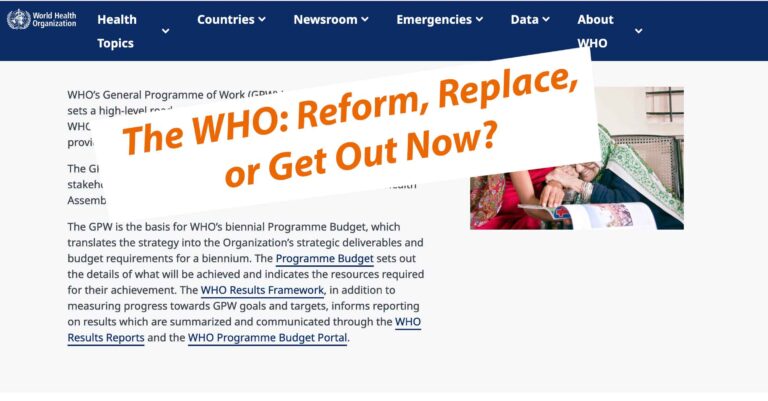
A major early adopter of the foundation model was the Rockefeller family, whose wealth was built on oil assets. The United Nations headquarters in New York City sits on land donated by the Rockefellers. Today the Bill and Melinda Gates Foundation along with the Gates-funded charity Gavi, play a dominant role in funding the World Health Organization,[1] which receives less than 15% of its budget from required payments by member states.[2] With philanthropic foundations playing such a critical role in the funding of the WHO it is not possible to overlook the role of foundations to both influence WHO policies and to benefit from those policies.
Large philanthropic institutions are the beneficiary of two powerful forces: the IRS tax code and the existence of immense wealth. Placing wealth within a philanthropic institution avoids taxation by the agreement to ‘donate’ funds to ‘charitable’ causes.
In essence the IRS says, “If you use your wealth to fund charities, we will not tax your wealth because you are performing a ‘social good’ and we will allow you to grow your pool of money tax free if you use those profits for more charity.”
Two major hazards are created by this structure.
First, the tax-free structure of philanthropy denies government treasuries immense sums of foregone tax revenue. You and I as taxpayers pay additional taxes to compensate for the money lost because of the charitable donations.
Second, the money used to make those gifts is managed by purchasing for-profit assets. Tax advantaged sums situated in philanthropic foundations must distribute only 5% of the foundation’s funds yearly. The other 95% can be, and almost always is, actively managed to “grow the pot”.
For example, in 2019 the Gates Foundation invested $55 million in BioNTech prior to the pandemic and saw its value soar to more than $550 million at the height of the vaccine rollout less than two years later, selling near the peak. Modern philanthropy is not simply a charity. It is also a nexus of information flows. Bill Gates, through the Bill and Melinda Gates Foundation and Gavi, is the second largest funder of the WHO after the United States.[3]
Philanthropic money is tax-advantaged money managed by individuals who often have access to inside information and little effective oversight. It is dark, advantaged, and sophisticated. The huge influxes of philanthropic cash curry favor and influence at both the UN and WHO.
[1] https://www.usnews.com/news/articles/2020-05-29/gates-foundation-donations-to-who-nearly-match-those-from-us-government
[2] https://www.kff.org/coronavirus-covid-19/fact-sheet/the-u-s-government-and-the-world-health-organization/
[3] https://www.brookings.edu/wp-content/uploads/2017/12/globalviews_who_funds_which_multilaterals.pdf