
Mark Fulford
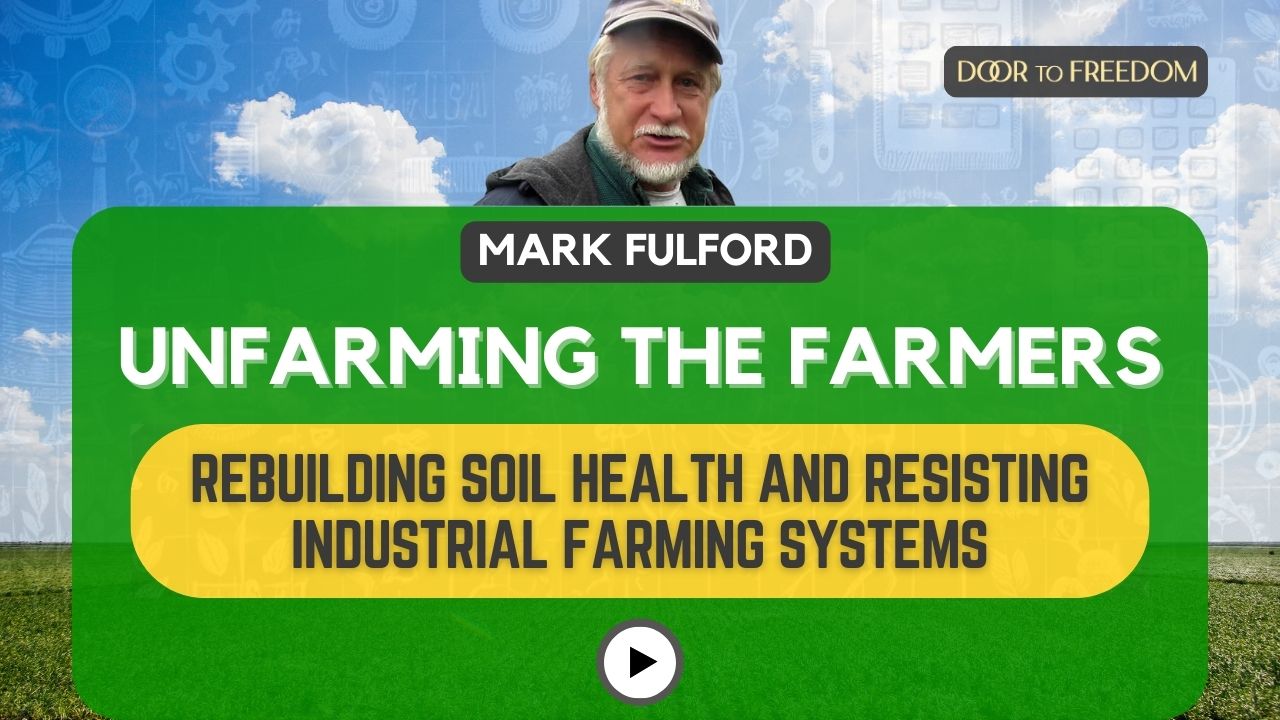
Drawing parallels between corporate farming and mining, Mark Fulford explains how large-scale industrial agriculture treats soil as a disposable asset, degrading its quality and extracting wealth while providing little nourishment. He explains how corporate contracts often bind farmers to rigid, unsustainable farming practices that not only deplete the soil but strip farmers of autonomy, leading to financial and environmental disaster.
Fulford stresses the importance of regenerative farming practices, focusing on soil health as the foundation. Fulford also critiques the modern organic certification system, noting how the label has been co-opted by large corporations. He argues that organic farming, once a movement centered on sustainability and health, has become little more than a marketing tool.
Additionally, he emphasizes the critical role of farmer self-education, urging farmers to move away from dependency on standard soil tests, chemical industry advisors, and corporate farming solutions. Instead, he advocates for a return to traditional, ancestral knowledge and independent research and learning to “read” the plants to see for yourself to see what they need, while prioritizing long-term soil and ecosystem health over short-term profits.
LINKS: