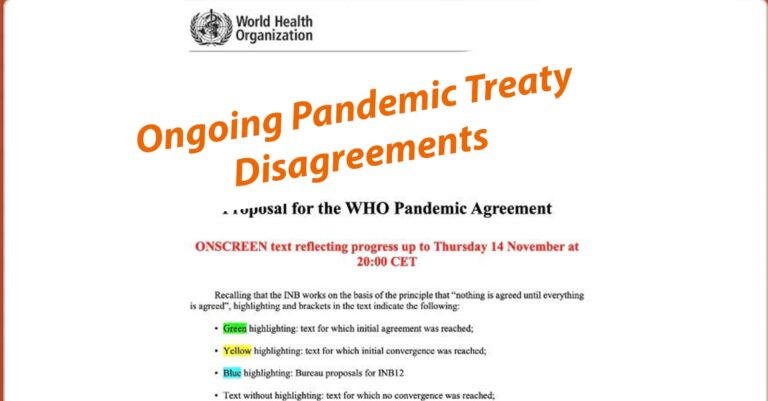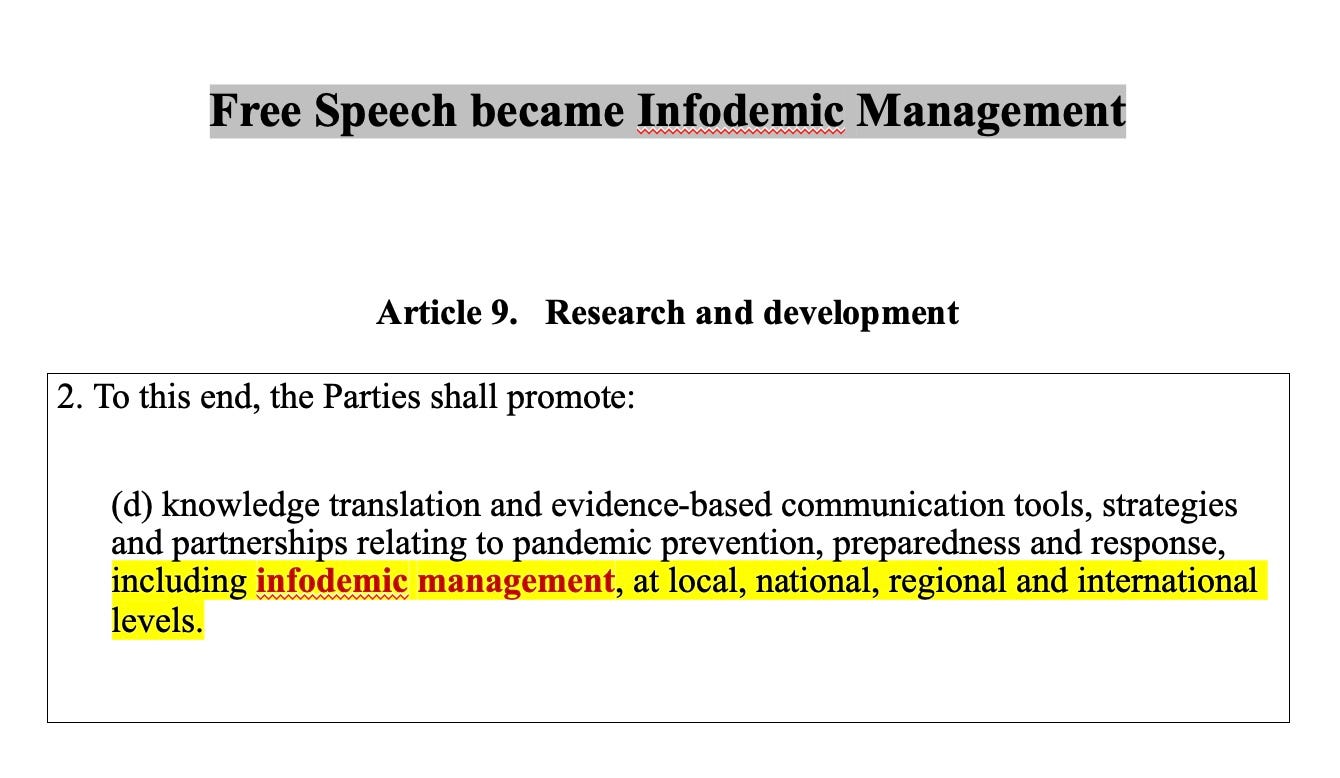

This draft was named “pandemic agreement” to keep us guessing whether it is really the same document or something else
This is the official version, the latest draft of the pandemic treaty dated October 30, 2023 that both the developing nations and Pharma did not like. But is there much for we the people to like?

The term “infodemic” pops up in Article 1, where it is defined as too much information, false information or misleading information. Why is too much information a problem?
Equity is to be at the center of this document, at its heart. Let’s see how long that lasts.
Free, unhindered access to accurate information is also right at the start of the document, in its “Objective and scope” section.
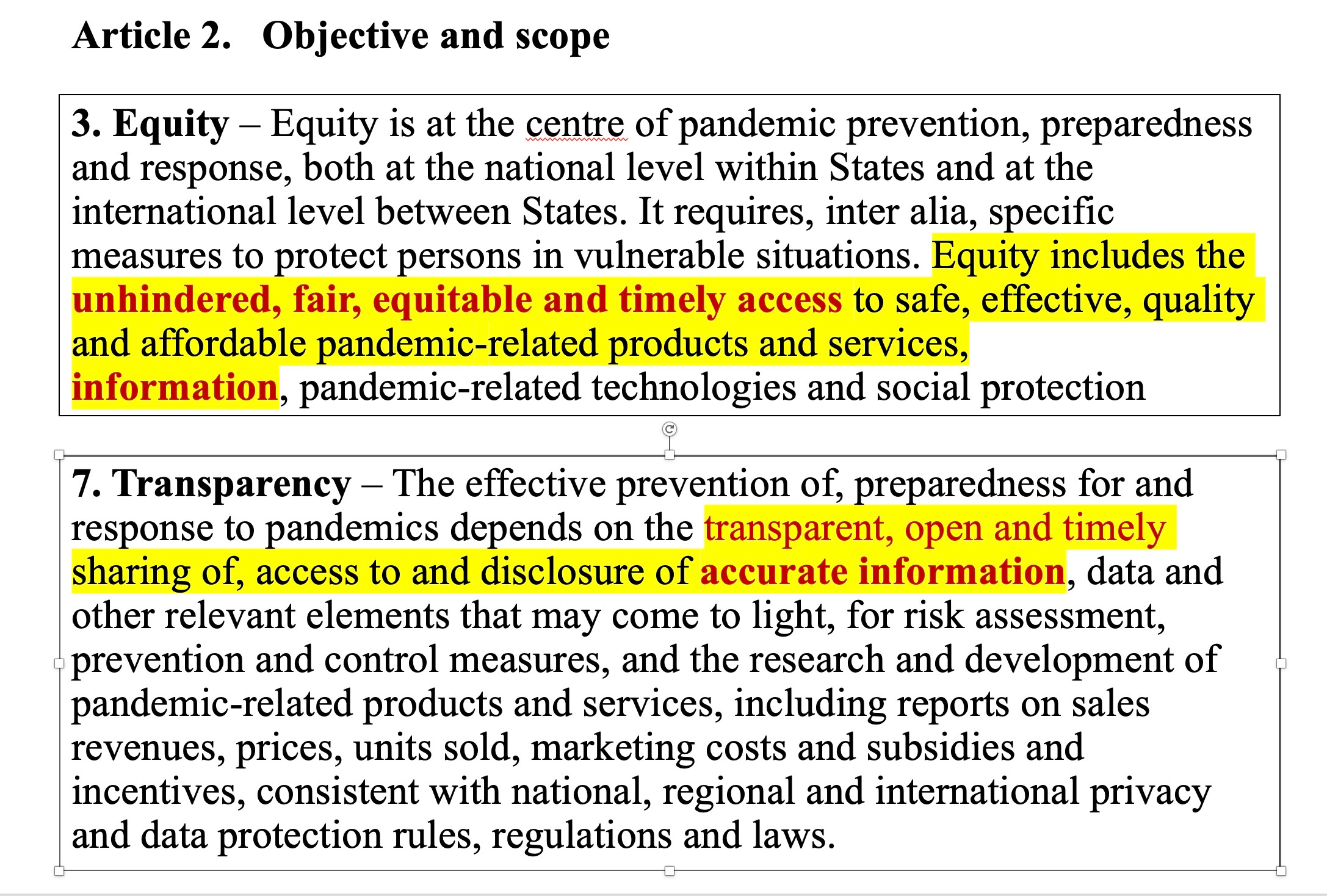
But these mellifluous phrases didn’t last long. By the time we reach the Article 17, equity has morphed into choosing who will get first dibs on pandemic products. Everyone is not equal after all.

After promising free, full and fair access to information in earlier articles above, the WHO treaty yanks freedom of speech away. Everyone has to control infodemics (too much information or unwanted information) at the local, regional national and international level. That is some massive censorship project being contemplated…or perhaps already in place.

And here, the pandemic treaty promises transparency regarding government contracts for drugs and vaccines. Transparency! What a beautiful word. But guess what? It’s a charade. Because this very week, the European Parliament and the Canadian parliament voted to continue to hide the contracts for COVID vaccines from their citizens. Do you really think nations and the WHO will allow future pandemic vaccine contracts to be open to the public, when so many billions of dollars in gravy was involved, and no entity: not DOD, HHS or the so-called manufacturers wants to be held responsible for the resulting deaths and destruction?