
|

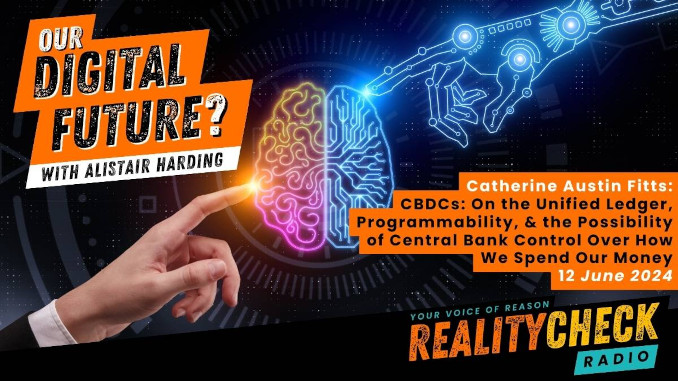
Catherine Austin Fitts Discusses CBDCs on New Zealand’s Reality Check Radio

Share this article

This article is a repost. It was published by The Solari Report.

In this installment of the Reality Check Radio series, “Our Digital Future,” Alistair Harding speaks to Catherine about the unified ledger, programmability, and the possibility of central bank control over how we spend our money.

This interview provides a good summary of the current issues surrounding CBDCs. As Catherine notes, there is a world of difference between the “fluffy” language bankers use to market CBDCs and the actual intent—a total control system that amounts to slavery.

Listen here.

Related:

Reality Check Radio: Our Digital Future

Similar Posts

  • Are Elections Honest?

    Share this article

    Probably most would agree that the two-party system keeps important topics like peace and single-payer healthcare out of the public discourse and ensures that candidates outside the mainstream will never have fair access to the election process. We know that PACs and corporate campaign finance (Citizens United) have an outsized effect on who gets…

  • SUPPORT:  Interstate Milk Freedom Act – HR 8374 

    Share this article

    Notwithstanding the Federal Food, Drug and Cosmetic Act (21 U.S.C. 301 et seq.), section 361 of the Public Health Service Act (42 U.S.C. 264), and any regulations or other guidance thereunder, a Federal department, agency, or court may not take any action (including any administrative, civil, criminal or other action) that would prohibit, interfere with, regulate, or otherwise restrict the interstate traffic of milk, or a milk product, that is unpasteurized and packaged for direct human consumption, if— 

  • Open Letter to the WHO Calling for Rule of LAw

    Share this article

    Share this article Open Letter calling for rule of law, equity and an appropriate review process in development…

  • Social Credit Score: Fiction or Reality?

    Share this article

    The concept of a social credit system is based on a government-run credit rating system that assigns score and trustworthiness to its citizens and businesses, which could be blacklisted or whitelisted based on the score itself. China’s social credit system started as a regional trial in 2009 and was expanded into a national pilot with eight credit scoring firms in 2014…