
Considerations of procedural issues that likely void the ability of a nation’s diplomats to approve the WHO’s 2 proposed international treaties
From where do diplomats get the power to turn over their country’s governance to the unelected WHO? The answer is that very few, if any, actually have the legal power to do so.
While only a government’s top officials can send a rejection to the WHO by the end of November for the May 2022 amendments (that shorten the period of time for future amendments to come into force and for nations to reject future amendments), the new leaders of Slovakia and New Zealand have voiced their objections and may do so.
But any parliamentarian can challenge, either at the level of the WHO or at the level of their own government, various Constitutional issues and procedures that could nullify the ability to pass the two proposed treaties. Below are 7 areas to consider:
1. Where is the evidence that the world health assembly took a vote on the May 2022 amendments? How did each country vote? Where is the roll call? Where are the voting procedures recorded? See letter from 12 EU parliamentarians sent to the WHO today.
2. Do your government diplomats have the authority to approve the May 2024 pandemic treaty and international health regulations? These two documents give away sovereignty to the WHO from their nation. Does your constitution allow this? Many do not.
3. Were all negotiators to the WHO given the proper authority to negotiate issues of national sovereignty and other matters in the two treaties: the pandemic treaty, and the international health regulation amendments? Was a parliamentary vote held to give them this power?
4. The WHO constitution says it is an advisory body that provides recommendations and assistance to nations when requested. Where in the WHO constitution does it allow the organization to transform itself from an advisory body to a governing body that can give orders to member states that must be obeyed?
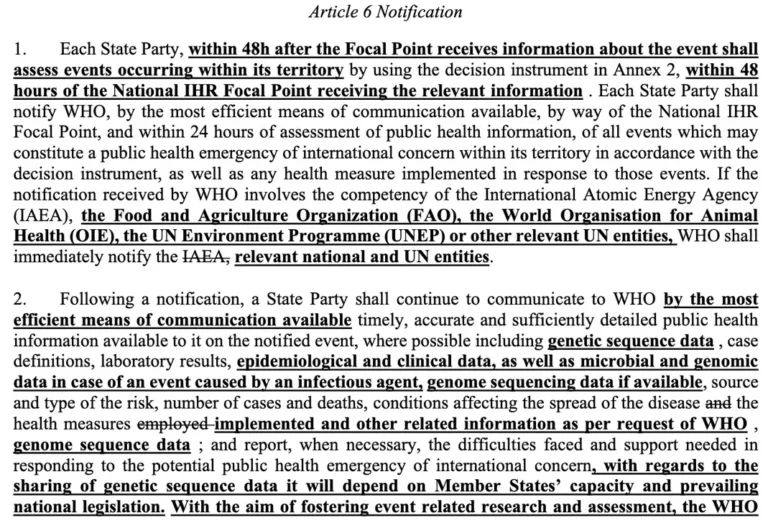
5. Under what authority does the WHO plan to withhold the final version of the amendments from the member states until after the four months’ deadline has passed during which nations must have to fully evaluate the proposed amendments? The international health regulations (2005) are completely clear in Article 55 that nation states need four months to consider any amendments before they can be voted on.
6. It is too early to reject the pandemic treaty and the proposed amendments as there exists no final version of either document, and the vote is planned to take place next May for both. However, any country can withdraw from the negotiations and announce it will not be bound by either treaty according to the 1969 Vienna Convention on the Law of Treaties.
7. A country can also announce its plans to leave the WHO.