
|

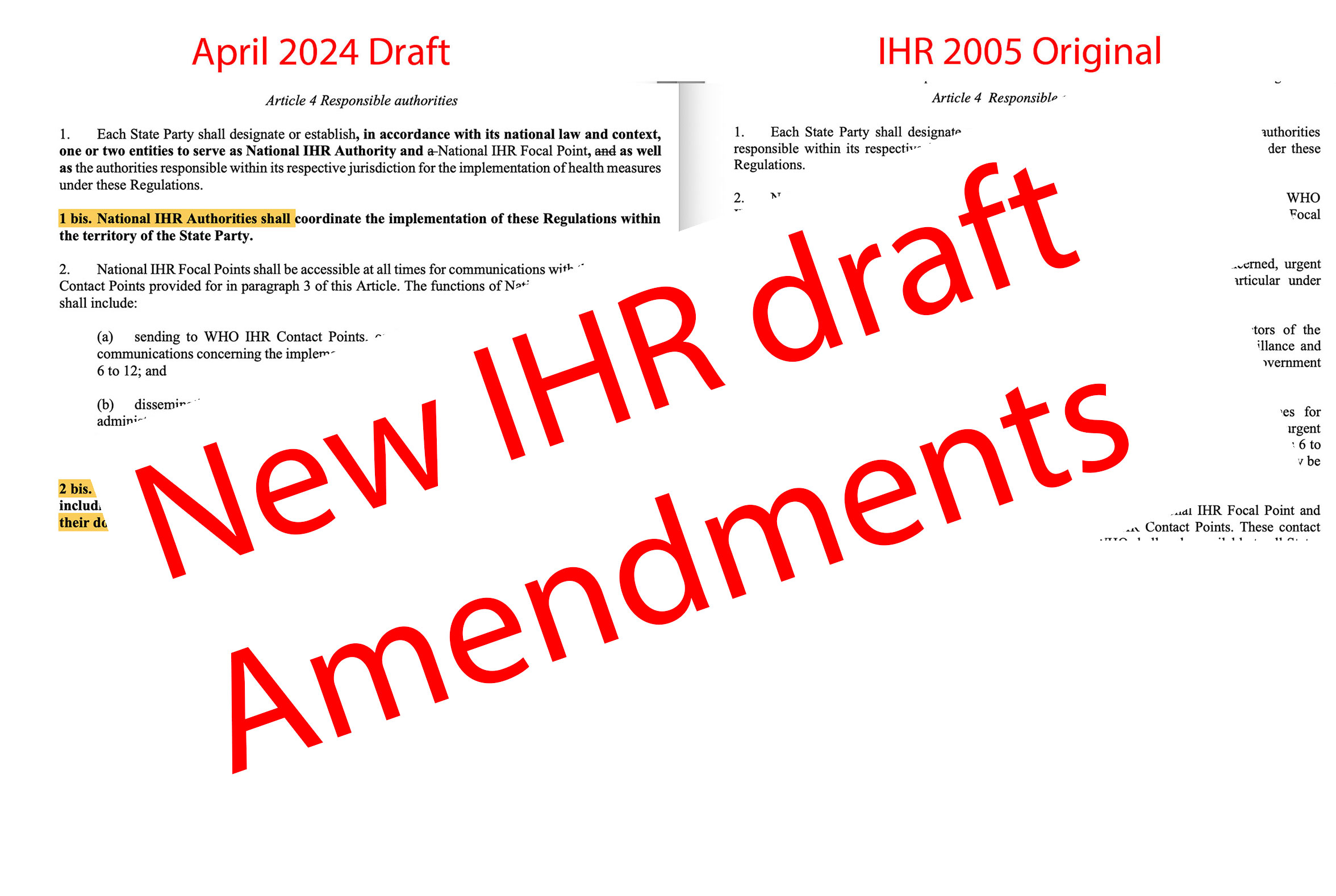
Recently circulated: new draft of amendments to the IHR

Share this article

The 300+ amendments proposed last year have been whittled down to something readable, yet still problematic.

The 8th meeting of the Working Group on the International Health Regulations (WGIHR) is happening this week. Their task has been to harmonize the 300+ proposed amendments to the International Health Regulations (IHR) 2005. These were first released in February 2023 to shock and dismay in the international community. They included items such as a strike through in “non-binding” and “with full respect for the dignity, human rights, and fundamental freedoms of persons.

More than a year went by before an unofficial draft was leaked in February 2024.

Today, a working draft, dated April 17 2024, is being circulated. It appears to be a real working draft and is hosted on the WHO website.

Primary Concerns & understanding how the document works:

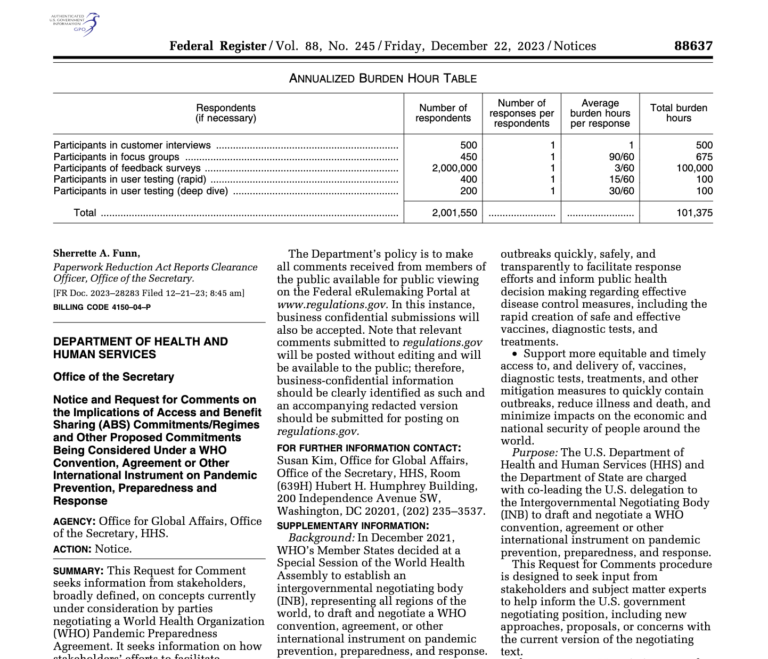
Rather than compare the April 17 2024 draft to prior draft amendments, let’s compare it to the standing IHR 2005 – current international law. In the US, the IHR 2005 has been further reinforced into domestic legislation through the NDAA 2023.

Binding versus Non-binding:

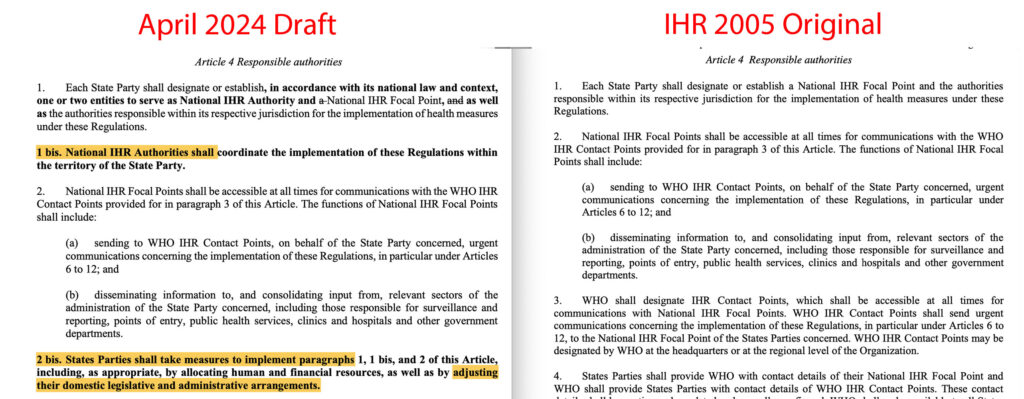
The IHR 2005, and this new draft, maintain the definition of recommendations being “non-binding.”  However, a substantive change is the new definition of the National IHR Authority. This entity coordinates implementation of the IHR within the individual country.

Article 4 shows how this becomes binding (see the “shall” words? Go read the NDAA 2023.)
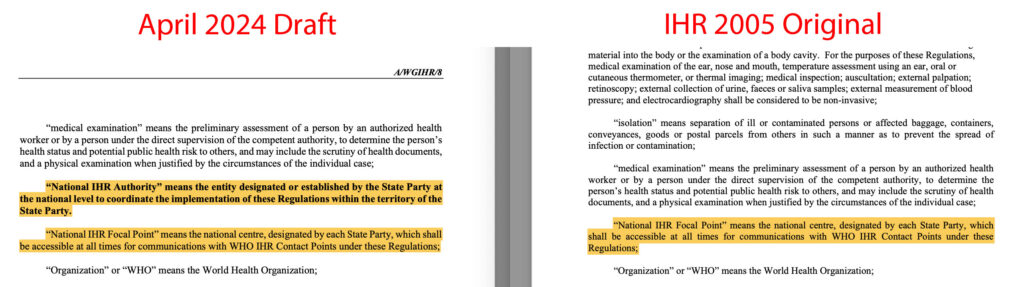
Human Rights

Human rights has been paired with equity.

Potential vs Actual Health Emergencies

The new language for potential pandemics is covered by “pandemic emergencies”, below:
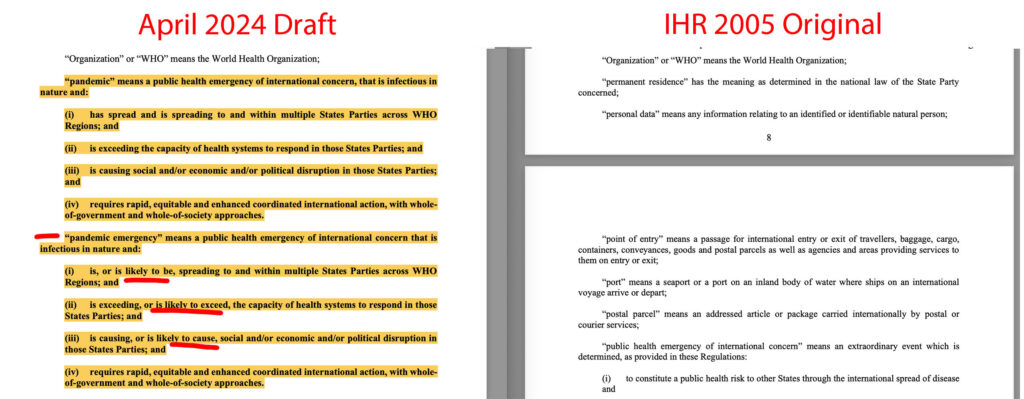
Article 12 allows “pandemic emergencies” (i.e. potential pandemics) to be determined by the Director General.

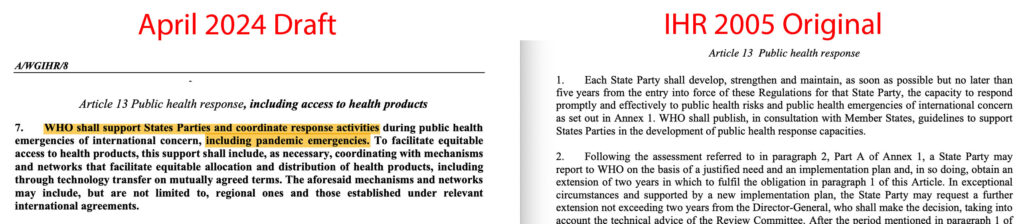
And Article 13 provides that the WHO shall coordinate the pandemic response, whether in a Pandemic or “pandemic emergency”:
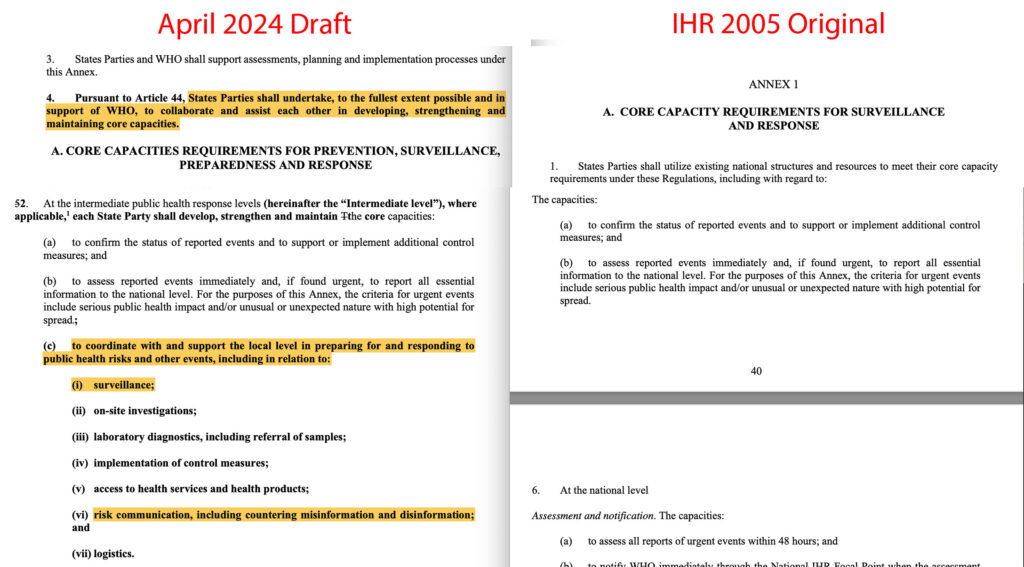
Censorship of misinformation; Surveillance

These items, problematic and illegal in some western countries, have been moved to Annex 1. Each state party “shall” develop these capacities both at the Intermediate and National Level.
Digital ID

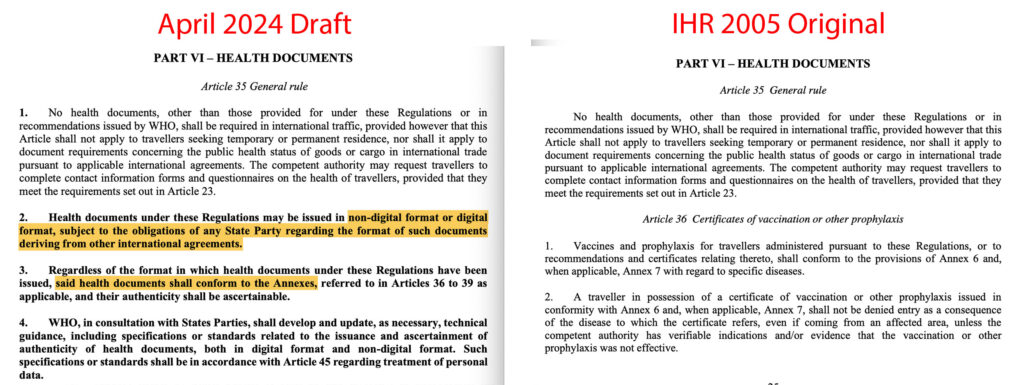
Article 35 has been updated planning for digital health documents. So has Annex 6.

Similar Posts

  • The Dangerous Rise of Coincidence Theorists in America

    Share this article

    A Coincidence Theory is an explanation which attributes an observed outcome to luck or random chance. Because it is impossible to ignore the reality that sometimes stuff just happens, Coincidence Theories are the default explanations when there are no others.

  • Bitter harvest — 30 years of broken GMO promises

    Share this article

    Whatever happened to GM Golden Rice? And wasn’t GM salmon supposed to revolutionise aquaculture? Three decades after the first GMO crops were planted, Save Our Seeds, in collaboration with GMWatch, with contributions from Beyond GM, explores the fate of eight GMO promises once presented as game-changers. The conclusion: bold claims, dismal delivery.

  • Bayer has paid over $10 Billion for glyphosate litigation

    Share this article

    Now it wants a liability shield to end the lawsuits, and it is determined to get it, by hook or by crook.  Can we stop it? In 2018, Bayer acquired Monsanto, despite Monsanto starting to lose legal cases in which Roundup was alleged to have caused cancer. It must have looked like a clever deal to Bayer, with the litigation reducing Monsanto’s price. But Bayer did not foresee that the Roundup litigation could get out of hand.

  • What is Central Bank Digital Currency?

    Share this article

    What is money, who makes it, and what is the role of the State and the banking system? These are big questions. Money can be a medium of exchange, a measure of value, a store of value, and a standard of value. In other words, money serves multiple purposes. Money can sit in your pocket, reside in your checking account, or represent the value of your house…

  • The Myth of Pandemic Preparedness

    Share this article

    Under the guise of pandemic preparedness an industry was built out, fortunes were made, and new lethal viruses and other microorganisms were discovered or created. A panoply of pandemics and accompanying WHO pandemic declarations have rolled out, one after the other, one scarcely ending before the next appears: 2009 swine flu, 2014 Ebola, 2016 Zika…