
|

Is Russia sending the WHO a shot across the bow?

St. Basil's Cathedral
Share this article

“Thinning of humanity,” lack of accountability and WHO coverups are all mentioned in a few sentences. What might this portend?

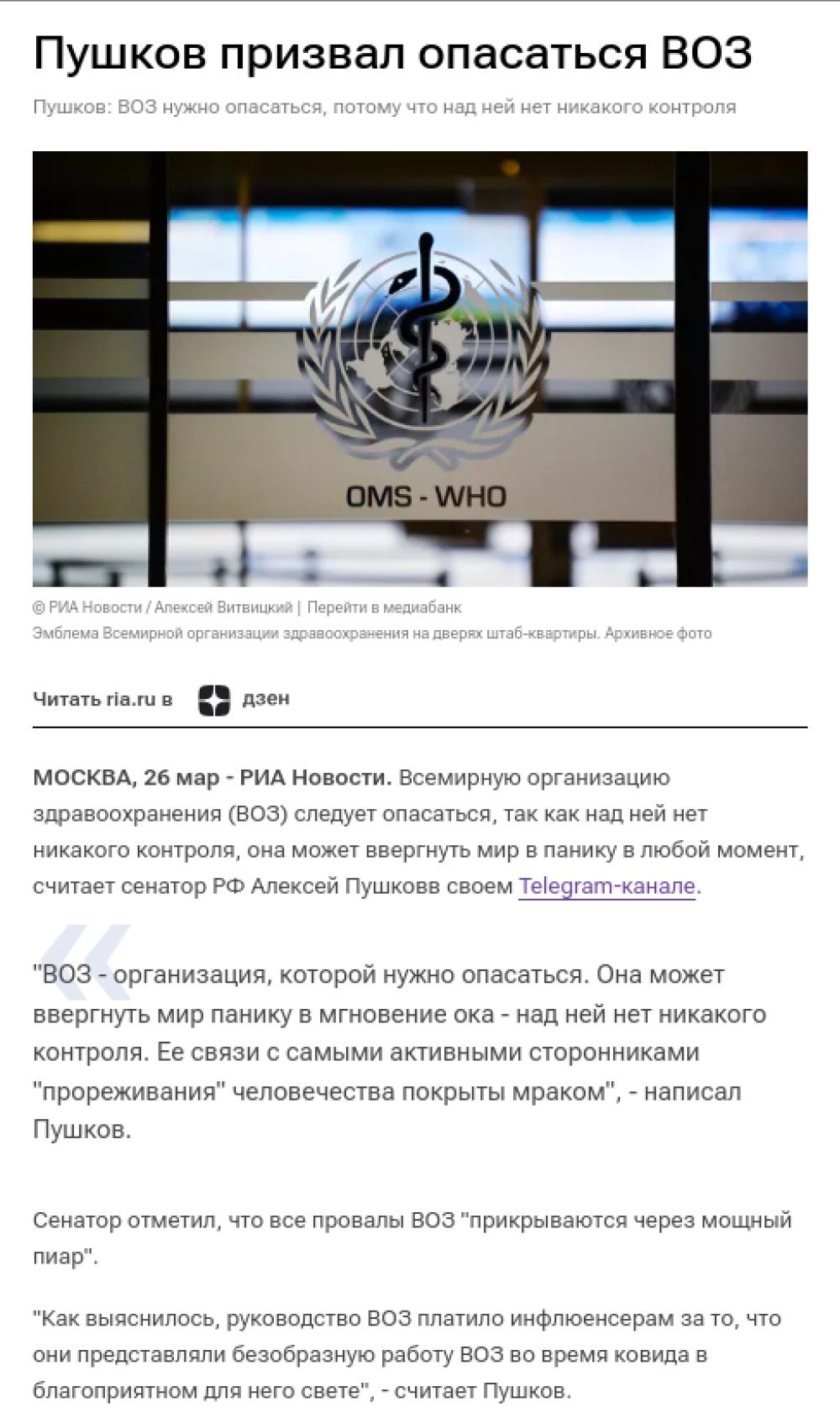
Russian Senator Aleksey Pushkov took to Telegram to complain about the WHO, and then RIA Novosti reported on it.

What is RIA Novosti? “RIA Novosti is the most cited Russian news agency in the mass media and across social media.”
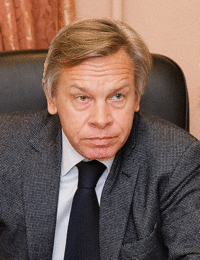
What did Pushkov say, and how was it reported?
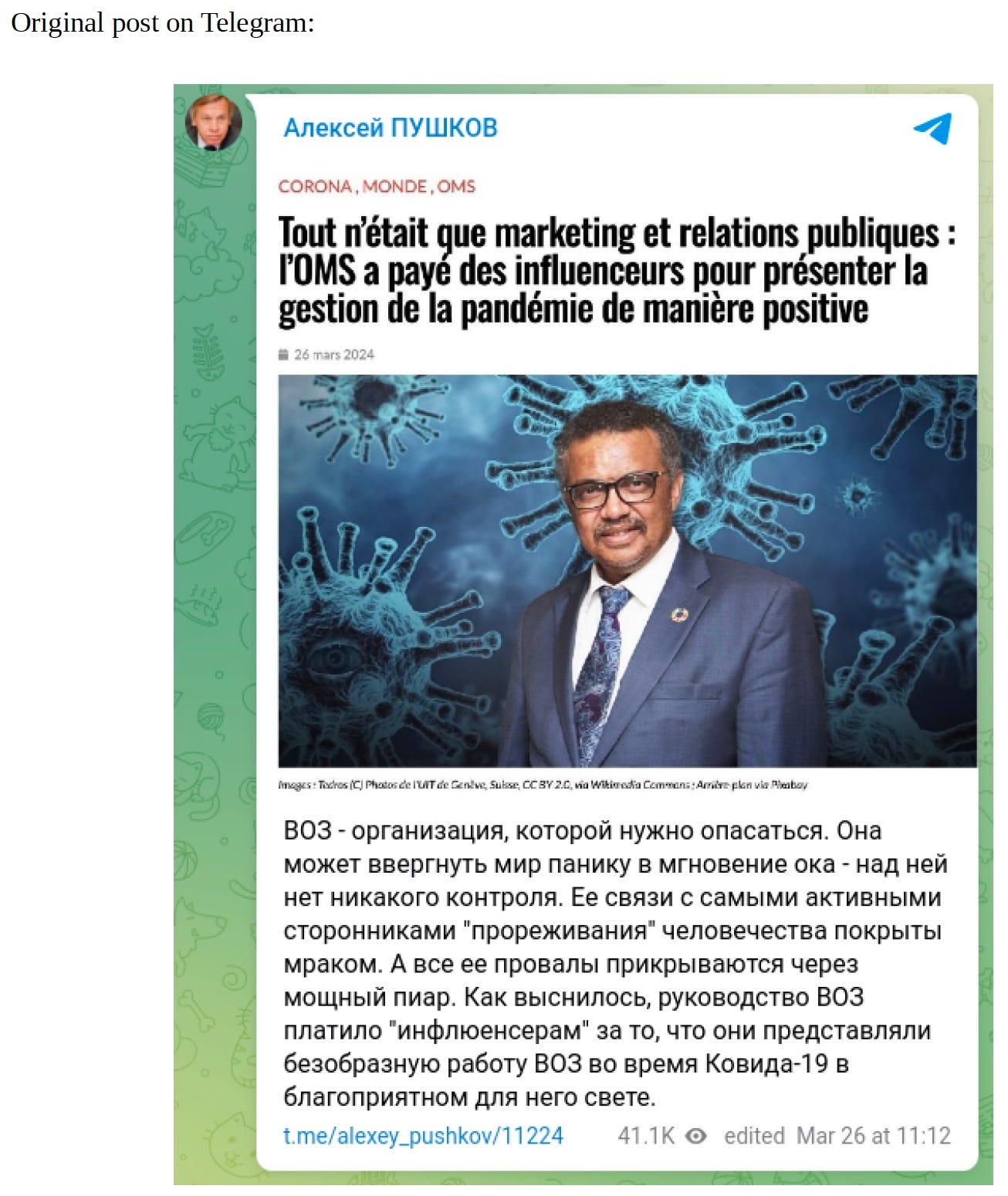
Who is Pushkov? Below is his bio; but important to note that he is also claimed to be a good friend of Vladimir Putin.

Aleksey Konstantinovich Pushkov (Russian: Алексе́й Константи́нович Пушко́в; born 10 August 1954) is a Russian politician who has been Senator from Perm Krai since 29 September 2016. He is also a former Deputy of the State Duma and former head of the Foreign Affairs Committee in the State Duma, the lower house of the Russian Parliament. As a member of the United Russia political party in the federation council, he is the chairman of the Commission on Information Policy.

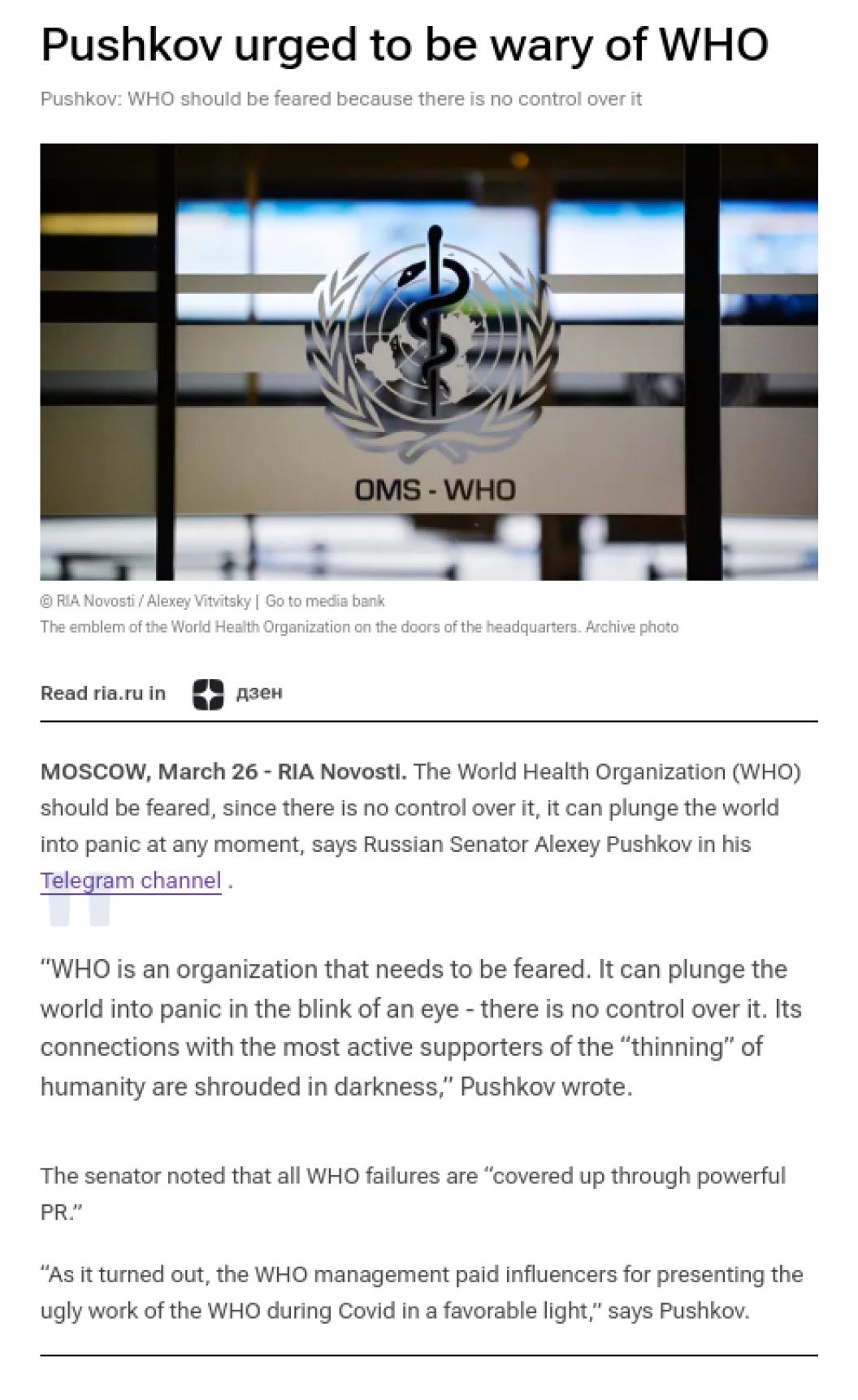
Here is what RIA reported in English and Russian:
Similar Posts

  • Prepared Plates: Securing America’s Food Infrastructure for the Future

    Share this article

    Share this article Tommy Waller Tommy Waller, retired Lieutenant Colonel and CEO of the Center for Security Policy,…

  • Centralizing Public Health Control With Dr. Wolfgang Wodarg

    Share this article

    Dr. Wolfgang Wodarg, Catherine Austin Fitts and Carolyn Betts talk all things pandemic propaganda on this week’s ‘Financial Rebellion’ episode. Find out how, even before the COVID-19 debacle, emergency powers may have been used and abused by vaccine manufacturers and those in power…

  • Nebraska Weighs in on Cattle Emission Conversation

    Share this article

    The environmental impacts of cattle emissions have been a contentious conversation in recent years. Some climate conscious consumers are concerned with cattle  emission’s potential and impact. Researchers at the University of Nebraska–Lincoln are discovering results that may improve and optimize our management practices and ease those concerns.