
Oppose: Use of Electronic Identification Eartags as Official Identification in Cattle and Bison (Final Rule). This is a final rule by the Animal and Plant Health Inspection Service (APHIS) within the United States Department of Agriculture (USDA) published May 9, 2024, effective date November 5, 2024 (89 FR 39540)
Current bills disapproving of or opposing the rule:
HJR 167 – https://www.congress.gov/bill/118th-congress/house-joint-resolution/167
SJR 98 – https://www.congress.gov/bill/118th-congress/senate-joint-resolution/98
S. 4282 – https://www.congress.gov/bill/118th-congress/senate-bill/4282
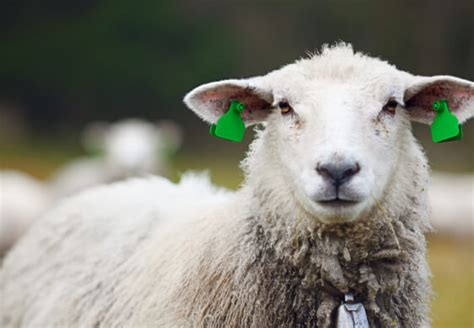
The rule amends, among other regulations, 9 CFR 86.4 Official Identification providing, “For an official eartag beginning November 5, 2024, all official eartags, sold for or applied to cattle and bison must be readable both visually and electronically.” The rule mandates electronic ID (EID) for both cattle and bison in interstate commerce. Under current law, visually readable tags, brands, tattoos, and breed registry certificates are recognized as official identification. See 9 CFR 86.4(a)(1).
Stopping the implementation of the rule is a top priority. In the short-term, the rule will improve the export market for the meatpackers and benefit the technology companies who stand to make millions supplying the electronic tags, readers and software. This comes at the expense of small farmers and ranchers—the ones who have to pay many times more for the electronic ID eartags than they would for the metal tags; by contrast, the rule provides a loophole that allows big corporate-owned herds to be grouped and tagged as one group, generating substantial savings for the large corporations. The other short-term effect for the independent farmers and ranchers is a loss of privacy; the mandatory electronic ID requirement creates a central registry detailing what the cattle farmer owns.
The longer-term ramifications of the rule are more ominous. The meatpackers will be in a better position to vertically integrate the beef industry—a development that occurred long ago within the poultry and pork industries. Four meat packers already control 80-85% of the beef market; mandatory EID can enable them to corner of the market completely. They would be able to do this through USDA using the new requirement to regulate independent farmers and ranchers into the ground. Representative Thomas Massie (R-KY) explains how this would work:
“They [USDA] can have 83 requirements that you need to be in compliance with in order to have cattle on your farm. Your fences have to be so high off the ground to allow the wildlife to pass through, all these constraints, and all these crazy things where your animals must have this whole schedule of vaccines.
They’ll make the childhood vaccines schedule look benign.
If you don’t comply with all these things, they’re going to stop you from selling your cattle at the point of sale. They’re going to run a wand over your animal. If the serial number doesn’t match up with a farm that’s compliant, no sale, and destroy the animal. What will happen is nobody that doesn’t have a whole team of lawyers and veterinarians and ecologists and environmentalists working on their farm will be able to be in compliance with all of these rules. The big companies, the big industrial meat complex I call it, will come along and say, ‘Listen, just be a franchise of us. We’ll either sell you the cattle or the embryos or whatever, and you raise them on your farm without tags and predetermine the price.’
It’s like it is with poultry. You basically will be the sucker holding the bank loan. The American cattlemen ranchers will go away, and you’ll be a wholly owned subsidiary of JBS if they get this through which they have.”
The rule on mandatory EID for cattle and bison would not be the final step for USDA in regulating animal traceability but only the beginning; in its press release on the final rule, USDA stated it is “committed to implementing a modern animal disease traceability system that tracks [all] animals from birth to slaughter….” Efforts are ongoing to make sure this massive surveillance and control system never gets underway.
Representative Harriet Hageman (R-WY) has introduced House Joint Resolution 167 (HJR 167), a resolution of disapproval which states:
“That Congress disapproves the rule submitted by the Department of Agriculture relating to ‘Use of Electronic Identification Eartags as Official Identification in Cattle and Bison’ published in the Federal Register on May 9, 2024 (89 Fed. Reg.39540 et seq.), and such rule shall have no force and effect.”
Senator Cynthia Lummis (R-WY) has introduced a companion measure, Senate Joint Resolution 98 (SJR 98).
Additionally, Senator Mike Rounds has introduced Senate Bill 4282 (S. 4282) which simply states, “The Secretary of Agriculture shall not implement any rules or regulations requiring the mandatory use of electronic eartags on cattle or bison.”
To date, HJR 167 has 17 cosponsors, and SJR 98 has one cosponsor, and S. 4282 does not yet have any cosponsors.
Another chance to stop the rule is for Congress to expressly prohibit funding for the mandatory EID when it passes the new funding bill that comes up September 30. The recent Supreme Court decision of overturning chevron deference increases the chances that a court challenge to the rule would be successful, but that couldn’t happen until November at the earliest when USDA starts enforcing the mandatory EID requirements.
—— 89 FR 39540 – https://www.federalregister.gov/documents/2024/05/09/2024-09717/use-of-electronic-identification-eartags-as-official-identification-in-cattle-and-bison